| |
| The bridge was originally authorized as the Strand Bridge, in an Act of
June 1809, but in a later Act of July 1816 the name was changed to Waterloo
Bridge in honour of Wellington's recent victory. It was completed in 1818
at a cost of £565,000. The bridge was probably first conceived by
the engineer Ralph Dodd, but the actual design was by the celebrated John
Rennie and not, as is sometimes stated, by Dodd's son George who was for
a time resident engineer under Rennie. At one time the bridge became notorious
for the number of suicides which leapt from it into the river. Structural
weaknesses having developed, the bridge was demolished in 1936, to make
room for the present Waterloo Bridge. |
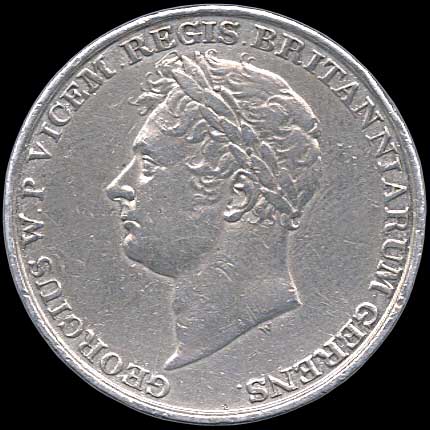
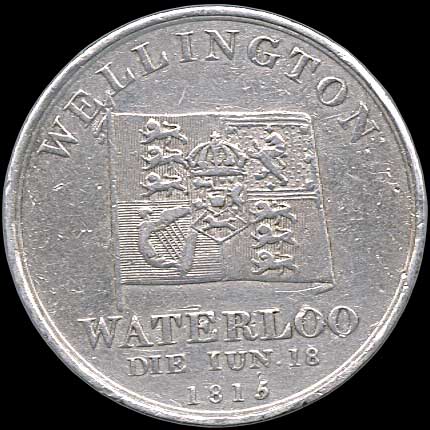
| These medals were distributed at the opening of the
bridge, 4,200 of them being struck; some specimens do not bear the edge
inscription. See Hocking, Catalogue of the coins, tokens, medals,
etc. in the Royal Mint. London, 1910, p. 248. |
| from British Historical Medals, Volume I, p. 232 |