CXXXIII - 1813
| Bataille de Wurtchen | |||||||||
 |
 |
||||||||
|
|
||||||||
| Size, 1 5/8 inches. | |||||||||
Laskey's Narrative:
| In consequence of the battle of Lutzen, the French advanced about eighty
miles, though the Prussian account says, that the allies remained masters
of the field of battle. |
| Napoleon entered Dresden on the 8th May, and the king of Saxony returned to his capital, which had been occupied by the allies on the 12th following. On the 18th, Bonaparte left Dresden, and arrived before Bautzen on the 19th, at 10 o'clock in the morning; after which, he employed the remainder of the day in reconnoitering the position of the allies. At noon, on the 20th, a brisk cannonade commenced in the neighborhood of Bautzen, which lasted six hours; during which, several charges were made by the allies without success: for General Compans took possession of Bautzen; and General Bonnet, by a running charge, took possession of a plain which rendered him master of the whole centre of the allied forces, and at seven in the evening they were driven back on their second position. The French Emperor entered Bautzen at night, about 8 o'clock. The battle of Bautzen being the prelude to the battle of Wurtschen. |
| On the 21st, Napoleon marched towards the heights, three quarters of a league in advance of Bautzen, at 5 o'clock in the morning. At eleven, the Duke of Treviso advanced 1000 toises from his position, and engaged in a dreadful cannonade before all the redoubts and entrenchments of the allies, and by the manoeuvres of the French they were kept in a state of uncertainty respecting the real point of attack. At length, the allies finding that the French had succeeded in turning their right, began to retreat, and this retreat soon became a flight: and at 7 o'clock in the evening, the Prince of Moskwa and General Laureston arrived at Wurtschen. The allies being now forced from all their positions, left the French masters of the field of battle, who found it covered with dead and wounded; they also took several thousand prisoners. |
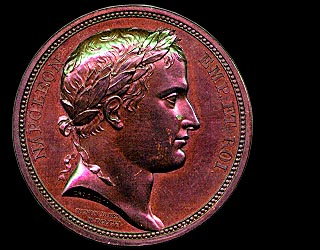
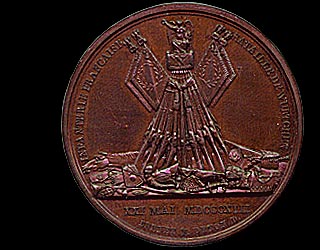
| To commemorate this event, the government of France directed a medal to be struck and issued from the national medal mint. |
| Bramsen - 1232 Bataille de Wurtchen (Depaulis et Brenet). |
|
| Comme celui du No 1229. | Rev: INFANTERIE FRANÇAISE BATAILLE DE WURTCHEN. Un faisceau de fusils formé sur un monceau de dépouilles ennemies, orné de drapeaux français et surmonté d'une Victoire. |
| Exergue: XXI. MAI MDCCCXIII. | |
| Médaille, 41 mm. - T. N. 57, 10; H. m. 51, 282; M. F. 402, 202. | |
| d'Essling - 1400 Bataille de Wurtchen (Depaulis et Brenet). |
|
| Buste de Nap. à dr. | R. Faisceau de fusils surmonté d'une Victoire ass. et accosté d'un monceau de dépouilles ennemies |
| (TN. 57.10 - M. 282 - B. 1232). Arg. et br. 41 mm. 2 p. | |